BioAg Feeding Schedule
About BioAg
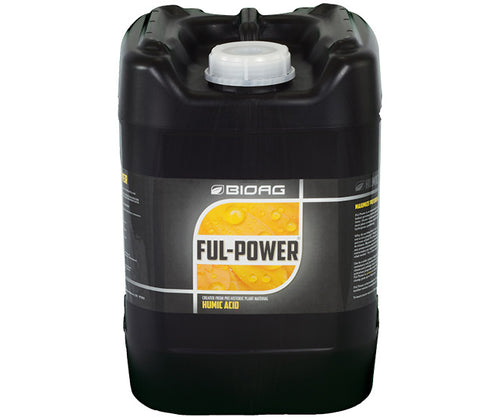
BioAg makes humic and fulvic acid products, and that is essentially all it makes. Ful-Power and VAM are the two you will hear about — a liquid fulvic acid and a mycorrhizal inoculant — along with TM7 and the dry humates.
Nothing here is a base nutrient. These are the products that make the base nutrient work harder: fulvic acid improves uptake and chelates micronutrients, and the mycorrhizae colonise the root zone so the plant can reach further for what is already in the medium. They slot into almost any programme without conflicting with it.
What we stock
Ful-Power, VAM, TM7 and the dry humate range.
How to use them
BioAg does not publish a week-by-week feeding chart for any of its products — there is no "Ful-Power at week 4, VAM at week 6" schedule to print, because that is not how this line is used. Each product is a rate-flexible amendment layered onto whatever base nutrient or soil program you are already running, dosed at a steady background rate rather than ramped through a bloom cycle. Below is what BioAg's own product pages say about each one.
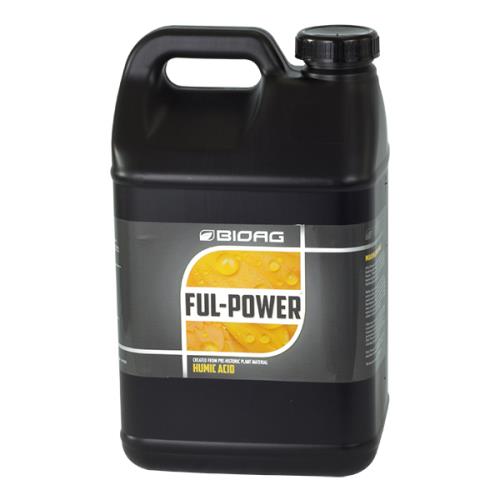
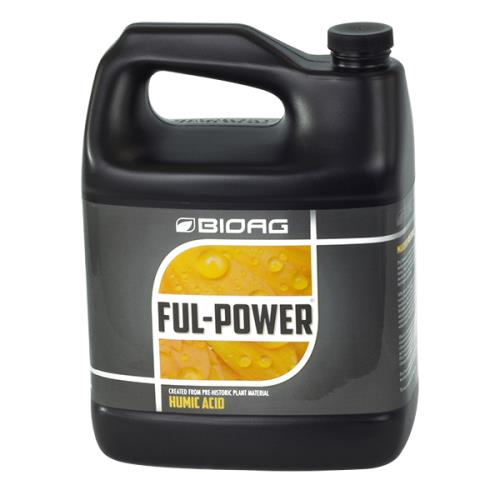
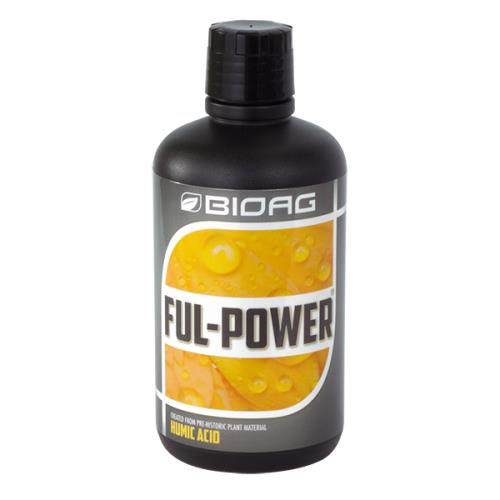
Ful-Power (liquid fulvic acid)
A fast-acting fulvic acid isolate that BioAg says can improve nutrient uptake. It will not affect pH or raise EC, works alongside any fertilizer or foliar spray, and will not clog drippers or sprayers. BioAg's own page says it can be used throughout the entire crop lifecycle, applied in-furrow, side-dress, by spray, or through fertigation.
VAM Endo-Mix (mycorrhizal inoculant)
A blend of endomycorrhizal fungi mixed with humic acids as a starter food source. It works best applied directly to seeds or roots — in-furrow or at planting — since the fungi need root contact early to establish. BioAg credits it with improving uptake of immobile nutrients like phosphorus and helping plants through the transplant stress of establishing a new root system.
TM-7 (fortified humic acid)
Humic acid fortified with seven micronutrients, which BioAg positions for regular use in greenhouse and outdoor programs, or at the first sign of a micronutrient deficiency. It is also called out on BioAg's site as a strong choice for activating compost tea. Applied in-furrow, by spray, fertigation, or side-dress.
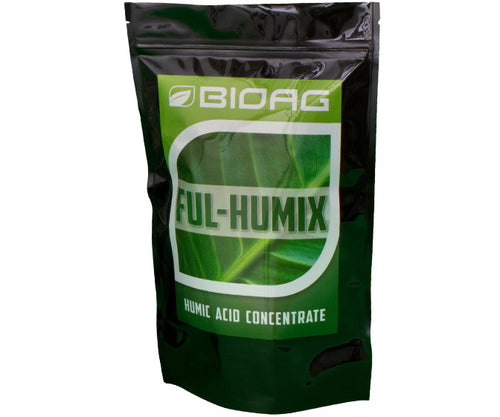
Ful-Humix (dry humates)
The dry, soluble, concentrated humic acid in the range — BioAg's own copy specifically flags spring application as when it is most effective for long-term soil benefit, though it can be used throughout the crop's lifecycle. In the root zone it is described as reducing uptake of sodium, aluminum and other metals that work against the plant, and preventing nutrient tie-up through chelation. Applied in-furrow or at planting.
None of these four is dosed on a rising bloom-week curve the way a base nutrient is, which is why there is no table above. Exact mixing ratios are printed on each product's own label — call us and we will read you the rate for the container size you have, or match it to your reservoir. Purpose, timing and application method above as published by BioAg at bioag.com/ful-power, /vam, /tm-7 and /ful-humix. Usage notes only — not a substitute for the printed label, and always follow the label rate on the container you actually have.
Questions about dosing for your setup? Call 508-461-5850 and we will walk you through it, or browse the full feeding schedule index for other brands we carry.
Shop BioAG
Everything on this schedule, stocked at Milford and Webster.